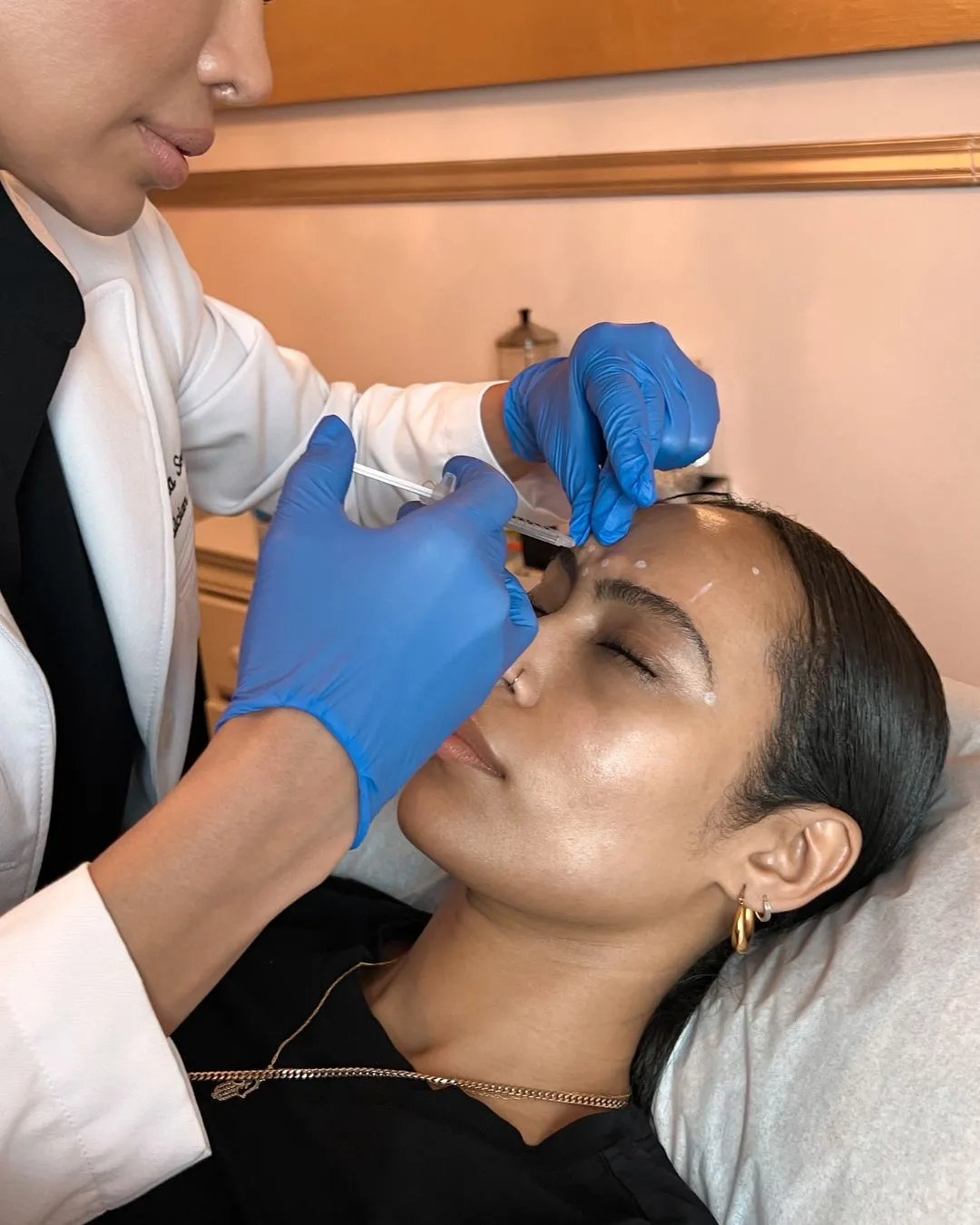
Watch Dr. Jay Park, Medical Director at Cosmetic Medical Training, demonstrate how to inject into marionette lines in the video below.
Marionette lines are among the most commonly requested lower-face concerns, and they are a staple of both dermal filler and neurotoxin training. This guide gives licensed healthcare professionals an overview of the anatomy, patient assessment, treatment options, and safety considerations behind a marionette lines injection. It is educational only and does not replace supervised training or the manufacturer's prescribing information.
What Are Marionette Lines?
Marionette lines are the vertical lines that run from the corners of the mouth down toward the chin. They get their name from the lines on a puppet's face. They tend to deepen with age and can give the face a downturned, tired, or sad look, even when the patient feels happy.
Several factors usually contribute:
- Volume loss in the lower face and around the chin and jawline
- Skin laxity and thinning as collagen declines over time
- Muscle pull from the muscles that draw the corners of the mouth downward
- Sun exposure and genetics
Because the causes differ from patient to patient, the best treatment plan depends on a careful assessment, not just on the lines themselves.
Anatomy to Understand Before Treating
Safe marionette lines injection depends on knowing the lower face well. Practitioners typically study:
- Depressor anguli oris (DAO): pulls the corners of the mouth down and can contribute to the downturned appearance.
- Mentalis and surrounding chin structures: influence chin shape and lower lip movement.
- Vascular anatomy around the mouth and chin, including branches of the facial artery, which matters most for filler placement.
- Mental foramen region, which practitioners learn to recognize and respect.
Our guides on dermal filler injection training and botulinum toxin injection training cover foundational anatomy in more depth.
Treatment Approaches
Practitioners generally consider more than one approach, often in combination:
Dermal filler
Hyaluronic acid filler is commonly used to restore support and soften the fold. Product choice depends on the patient's tissue, goals, and the product's intended use, so always follow the manufacturer's guidance. For a look at product differences, see our comparison of Evolysse and other HA fillers.
Neurotoxin for the DAO
In some patients, relaxing the DAO can help lift the corners of the mouth slightly. Whether this is appropriate depends on the patient's anatomy and your training, and it requires careful placement to avoid affecting nearby muscles.
Treating the whole lower face
Marionette lines often improve most when practitioners also consider the chin, jawline, cheeks, and the nasolabial folds, rather than treating the line alone. Addressing the underlying support can give a more natural result.
Assessing the Patient
A good marionette lines injection begins with consultation:
- Review medical history, medications, allergies, and prior treatments.
- Examine the face at rest and in motion to see how the mouth corners and chin behave.
- Look at the whole face, including volume, skin quality, and facial proportions.
- Discuss goals and set realistic expectations, including that subtle improvement often looks more natural than complete erasure of the line.
- Obtain informed consent and photograph according to your protocol.
Our article on mastering patient expectations can help with this step.
Safety Considerations
The lower face has areas where precision matters. Practitioners should be able to recognize and manage possible effects, such as:
- Bruising, swelling, or tenderness
- Lumps or irregularities
- Asymmetry
- Vascular compromise, a rare but serious risk with filler, which requires immediate recognition and a clear emergency plan
- Unwanted effects on nearby muscles with neurotoxin, such as changes in the smile
Specific doses, depths, and techniques must come from the product's current prescribing information and from supervised instruction. Know your facility's complication protocol and have the necessary emergency supplies available, as taught in your training.
Aftercare and Follow-Up
Patients are commonly advised to follow their provider's written instructions and to contact the practice if they notice anything unusual. A follow-up visit lets you check results, address asymmetry, and plan further treatment. Understanding how filler can migrate in the perioral area is also useful for planning future visits.
Practice Marionette Lines Injection With Us
Watching a demonstration is a helpful start, but safe injecting comes from supervised practice. Our courses let trainees practice many techniques under an experienced instructor:
- Online Dermal Filler Training
- Hands-On 1 Day Basic Botox & Dermal Filler Training
- Hands-On 1 Day Advanced Botox & Dermal Filler Training
- Hands-On 2 Days Comprehensive Botox & Dermal Filler Training
Requirements for who may inject differ by state. Read our guide to legal considerations before starting your Botox training and confirm with your licensing board.
Related Technique Guides
- Nasolabial Fold Injection Technique
- Glabellar Botox Injection Technique
- Dysport Crow's Feet Injection Technique
FAQ
What causes marionette lines?
A mix of volume loss, skin laxity, downward muscle pull, and sun exposure and genetics. This is why assessment matters before treatment.
Are marionette lines treated with filler or Botox?
Often with dermal filler, sometimes combined with neurotoxin for the DAO, depending on the patient's anatomy and goals. Many practitioners also treat nearby areas for a balanced result.
What is the main safety risk with filler near the mouth?
Vascular compromise is the most serious concern. Knowing the vascular anatomy and having an emergency plan are essential.
Can nurses, dentists, and physician assistants learn this technique?
Our courses are open to licensed healthcare professionals. Whether you may inject, and under what supervision, depends on your state's rules.
Do I need hands-on practice?
Online lessons cover foundations, but hands-on practice on live models with an instructor builds the skill and confidence that videos alone cannot.