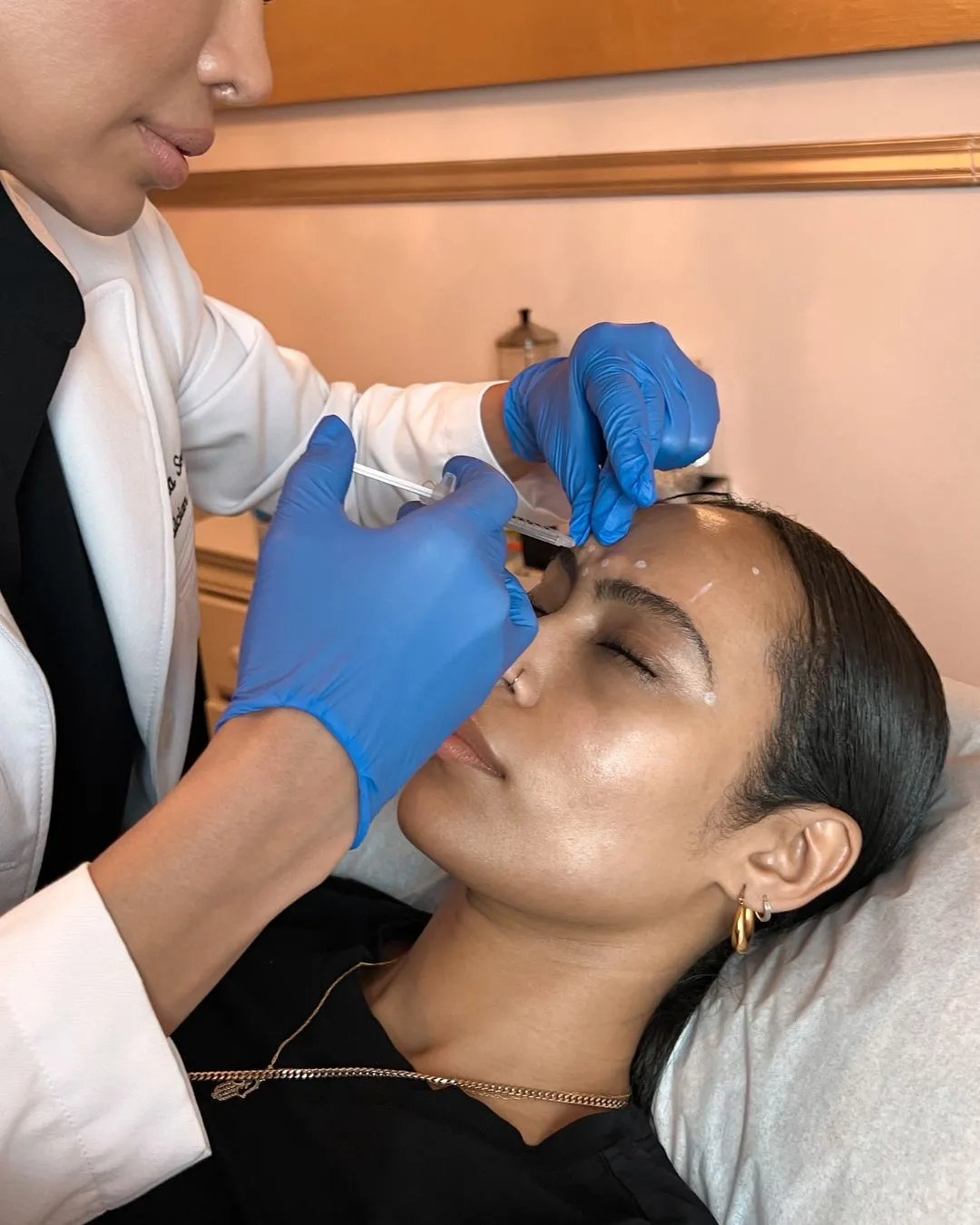
Watch Dr. Jay Park, Medical Director at Cosmetic Medical Training, demonstrate dermal filler injections in the nasolabial folds in the video below. It is one of the most common areas corrected with dermal fillers, and one of the first techniques trainees practice in our dermal filler courses.
This guide gives licensed healthcare professionals an overview of the anatomy, patient assessment, treatment planning, and safety considerations behind nasolabial fold filler injection. It is educational only and does not replace supervised training or the manufacturer's instructions for use.
What Are Nasolabial Folds?
The nasolabial folds are the creases that run from the sides of the nose down toward the corners of the mouth. They separate the cheek from the upper lip. Everyone has some fold, because it forms from normal facial anatomy and expression. It becomes a concern when it deepens and makes the patient look older or more tired than they feel.
Common contributing factors include:
- Midface volume loss and descent of the cheek, which pushes tissue down over the fold
- Skin thinning and loss of elasticity with age
- Repeated facial movement, such as smiling
- Sun exposure and genetics
Because the fold is often a result of changes in the cheek above it, the best plan considers the whole midface rather than the fold alone.
Anatomy to Know Before You Inject
Safe nasolabial fold filler injection starts with knowing the area well. Practitioners typically study:
- The layers of the cheek and fold, including skin, fat compartments, muscle, and deeper support structures
- The muscles of the midface and upper lip, which influence how the fold moves
- The vascular anatomy, especially the facial artery and its branches near the nose and mouth, such as the angular artery, which makes this a region where precision matters
Our guide to dermal filler injection training covers foundational facial anatomy in more depth.
Assessing the Patient and Planning Treatment
A good result starts with consultation:
- Review medical history, medications, allergies, and prior filler treatments.
- Examine the face at rest and in motion, noting the depth of the fold, skin quality, and cheek position.
- Evaluate the midface as a whole. Restoring support to the cheek may improve the fold more naturally than treating the fold alone.
- Discuss goals and expectations, including that the aim is usually softening, not erasing, the fold, since some fold is normal.
- Obtain informed consent and photograph according to your protocol.
Our article on mastering patient expectations can help with this step.
Choosing a Filler
Hyaluronic acid (HA) fillers are commonly used for the nasolabial folds, and different products behave differently in the tissue. Product choice should follow the manufacturer's instructions for use, your training, and your patient's needs. To learn more about specific products, see:
- Juvederm Injection Training Certification Course
- Restylane/Perlane Injection Training Certification Course
- RHA Injection Training Certification Course
- Evolysse compared with other HA fillers
- Understanding FDA designations for medical devices
Principles of the Injection Technique
Exact volumes, depths, needle or cannula choices, and injection patterns must come from the product's instructions for use and from supervised instruction. In general, practitioners focus on:
- Preparing the area and the product correctly, following aseptic technique
- Choosing a technique suited to the patient's anatomy and the product, such as threading or small deposits, as taught in training
- Injecting slowly and with control, while watching the patient and the tissue
- Molding and assessing as you go, aiming for a natural, gradual improvement
- Documenting the product, lot number, and treatment areas
Safety Considerations
The nasolabial region is a well-known area for vascular complications with filler, so practitioners should be prepared. Be able to recognize and manage:
- Vascular compromise, a rare but serious risk that requires immediate recognition, a clear emergency protocol, and access to the supplies your training calls for
- Bruising, swelling, and tenderness
- Lumps, irregularities, or overcorrection
- Infection or inflammatory reactions
Know your facility's complication plan and when to escalate care. Careful anatomy knowledge, patient selection, and technique all reduce risk, but they cannot remove it.
Aftercare and Follow-Up
Patients are commonly given written instructions and told to contact the practice if they notice anything unusual, such as severe pain, color changes, or vision changes. A follow-up visit lets you review the result, address asymmetry, and plan future treatment. Free templates for patient instructions are among the resources available when you join our email list.
Practice Nasolabial Fold Injection With Us
Watching a demonstration is a helpful start, but safe injecting comes from supervised practice. Our courses let trainees practice this and many other techniques with an experienced instructor:
- Online Dermal Filler Training
- Hands-On 1 Day Basic Botox & Dermal Filler Training
- Hands-On 1 Day Advanced Botox & Dermal Filler Training
- Hands-On 2 Days Comprehensive Botox & Dermal Filler Training
Requirements for who may inject differ by state. Read our guide to the legal considerations before starting your Botox training and confirm with your licensing board.
Related Technique Guides
- Marionette Lines Injection Technique
- Glabellar Botox Injection Technique
- Avoiding Lip Filler Migration
FAQ
What causes nasolabial folds to deepen?
Midface volume loss and descent, skin thinning, repeated facial movement, and sun exposure and genetics all play a part. This is why assessing the whole midface matters.
Should the fold be filled directly?
Not always. Many practitioners consider restoring cheek support first, then treat the fold itself if needed, depending on the patient's anatomy and goals.
What is the main safety risk with filler in this area?
Vascular compromise is the most serious concern. Knowing the vascular anatomy and having an emergency plan are essential.
Can nurses, dentists, and physician assistants learn this technique?
Our courses are open to licensed healthcare professionals. Whether you may inject, and under what supervision, depends on your state's rules.
Do I need hands-on practice?
Online lessons cover foundations, but hands-on practice on live models with an instructor builds the skill and confidence that videos alone cannot.