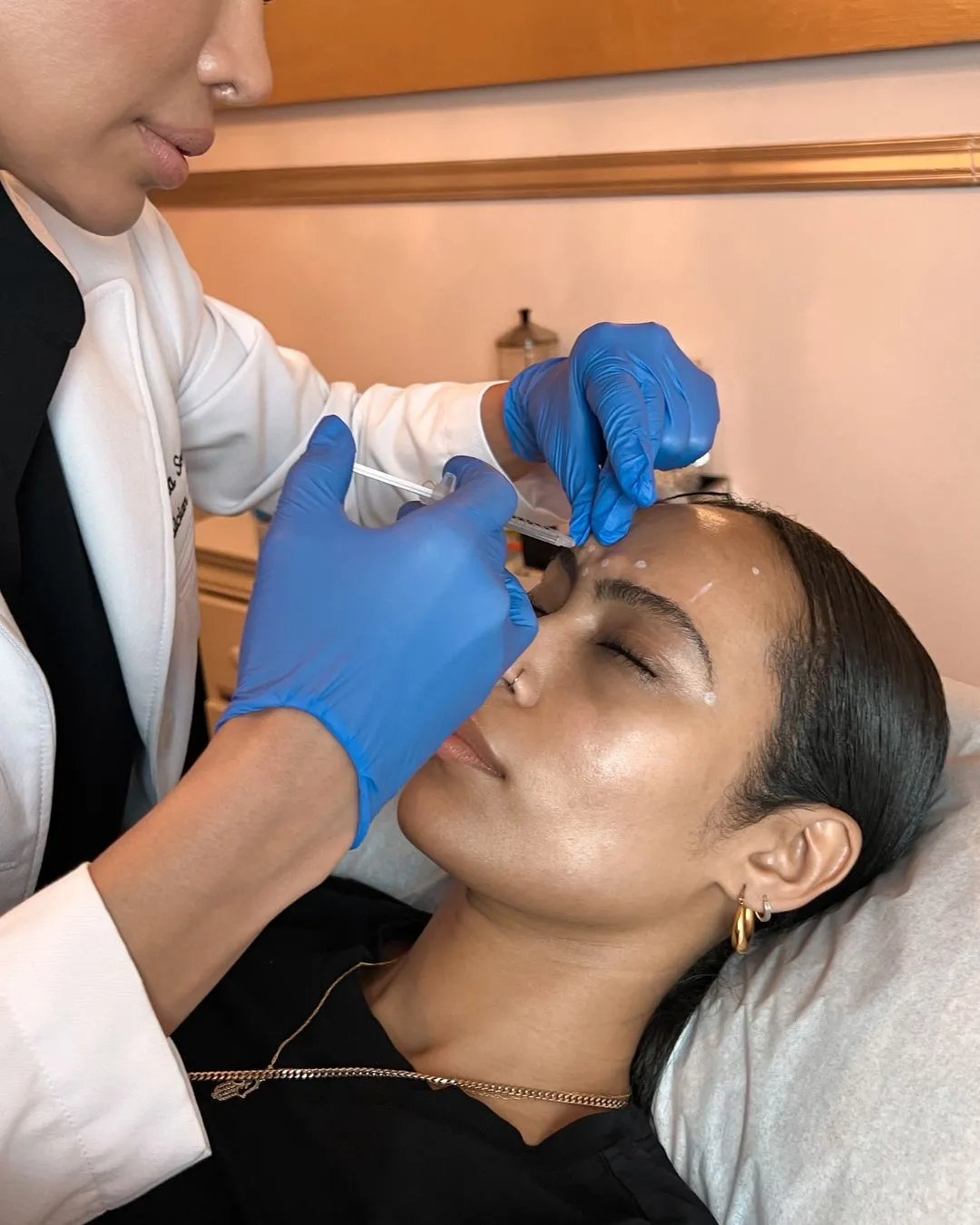
Watch Dr. Jay Park, Medical Director at Cosmetic Medical Training, demonstrate the glabellar Botox injection technique in the video below.
The glabellar region, the area between the eyebrows, is one of the most common areas treated with botulinum toxin and one of the first techniques taught in any Botox course. This guide gives licensed healthcare professionals an overview of the anatomy, patient assessment, safety considerations, and training options for glabellar Botox injection. It is educational only and does not replace supervised training or the manufacturer's prescribing information.
What Are Glabellar Lines?
Glabellar lines, often called frown lines or "the 11s," are the vertical creases that form between the eyebrows. They appear when a person frowns or concentrates, and over time they can remain visible even at rest. Patients often seek treatment because these lines can make them look tired, stressed, or angry even when they feel fine.
Botulinum toxin works by temporarily reducing the activity of the muscles that pull the brows together and down, which softens the lines that those movements create.
Glabellar Complex Anatomy
Understanding the muscles involved is the foundation of safe treatment. The glabellar complex typically includes:
- Corrugator supercilii: pulls the brows medially and downward, creating the vertical frown lines.
- Procerus: pulls the medial brow down and creates the horizontal line at the root of the nose.
- Depressor supercilii and medial orbicularis oculi: contribute to downward and inward brow movement.
Muscle strength and shape vary between patients, so assessment before every treatment is essential. Knowledge of nearby structures, including the frontalis (which lifts the brows) and the levator palpebrae superioris (which lifts the upper eyelid), helps practitioners avoid unwanted effects.
Assessing the Patient Before Treatment
A thorough consultation comes before any glabellar Botox injection. Practitioners commonly:
- Review medical history, medications, and allergies, and confirm the patient is an appropriate candidate.
- Ask about pregnancy or breastfeeding, since neurotoxin treatment is generally avoided in these situations.
- Observe the face at rest and in motion, asking the patient to frown so you can see how the muscles contract.
- Note brow position and symmetry, including any pre-existing brow or eyelid asymmetry.
- Discuss goals and expectations, including that results develop over days and that a natural look usually means some movement remains.
- Obtain informed consent and take photos according to your protocol.
Our article on mastering patient expectations in aesthetic medicine goes deeper on this step.
Principles of the Injection Technique
Specific doses, injection points, and depths should come from the current prescribing information for your product and from supervised instruction. In general, the technique involves:
- Preparing the product correctly. Use the reconstitution and handling guidance for your specific product. See our guide to botulinum toxin storage.
- Planning placement by muscle. Treatment targets the corrugator and procerus based on the patient's individual muscle pattern.
- Respecting safety boundaries. Keeping injections within the intended muscle area and away from the orbital rim reduces the risk of product spreading to structures that control the upper eyelid.
- Using a controlled, careful injection method, with attention to aspiration practices and patient comfort according to your training.
- Documenting the treatment, including product, lot number, and injection sites.
Practitioners who want to learn these steps hands-on can join our online comprehensive Botox training or one of our in-person courses.
Possible Side Effects and How to Reduce Risk
Most side effects of a glabellar Botox injection are mild and temporary, but practitioners should be able to recognize and discuss them:
- Bruising, redness, or swelling at the injection sites
- Headache after treatment
- Brow heaviness or asymmetry
- Eyelid ptosis (a drooping upper eyelid), which can occur if product affects the levator palpebrae superioris
Careful patient selection, precise placement, and clear aftercare instructions all help lower risk. Practitioners should also know their facility's plan for managing complications and when to escalate care.
Aftercare Advice Practitioners Often Give
Patients are commonly advised to avoid rubbing or pressing the treated area and to follow the specific instructions from their provider. Providing written pre- and post-treatment instructions helps patients know what to expect. Free templates are among the resources available when you join our email list.
Follow-Up and Assessment of Results
Results typically develop gradually over the days after treatment, so many practitioners schedule a follow-up visit to evaluate symmetry and make careful adjustments if needed. Reviewing photos from before and after treatment helps guide decisions and set expectations for future visits.
Learn Glabellar Botox Injection With Hands-On Practice
Watching a demonstration is a useful start, but safe injecting is built through supervised practice. Our courses let trainees practice the glabellar technique and many others under the guidance of an experienced instructor:
- Online Comprehensive Botox Training
- Hands-On 1 Day Basic Botox & Dermal Filler Training
- Hands-On 2 Days Comprehensive Botox & Dermal Filler Training
Requirements for who may inject and under what supervision differ by state. Read our guide to the legal considerations before starting your Botox training and confirm with your licensing board.
Related Technique Guides
- Dysport Crow's Feet Injection Technique
- Nasolabial Fold Injection Technique
- Baby Botox vs. Microtox
- What is BOTOX Cosmetic?
FAQ
Which muscles are treated in glabellar Botox injection?
The corrugator supercilii and procerus are the main muscles targeted, with treatment planned according to each patient's muscle pattern.
How long does it take to see results?
Results develop gradually over days rather than immediately. Check the prescribing information for your product for details, and schedule a follow-up to assess the outcome.
What is the most important risk to know about?
Eyelid or brow ptosis is one of the effects practitioners study most closely. Careful anatomy knowledge, patient selection, and placement help reduce the risk.
Can nurses, dentists, and physician assistants learn this technique?
Our courses are open to licensed healthcare professionals. Whether you may inject, and under what supervision, depends on your state's rules, so confirm with your licensing board.
Do I need hands-on practice before treating patients?
Online lessons cover foundations, but hands-on practice on live models with an instructor builds the skill and confidence that reading and watching cannot fully provide.