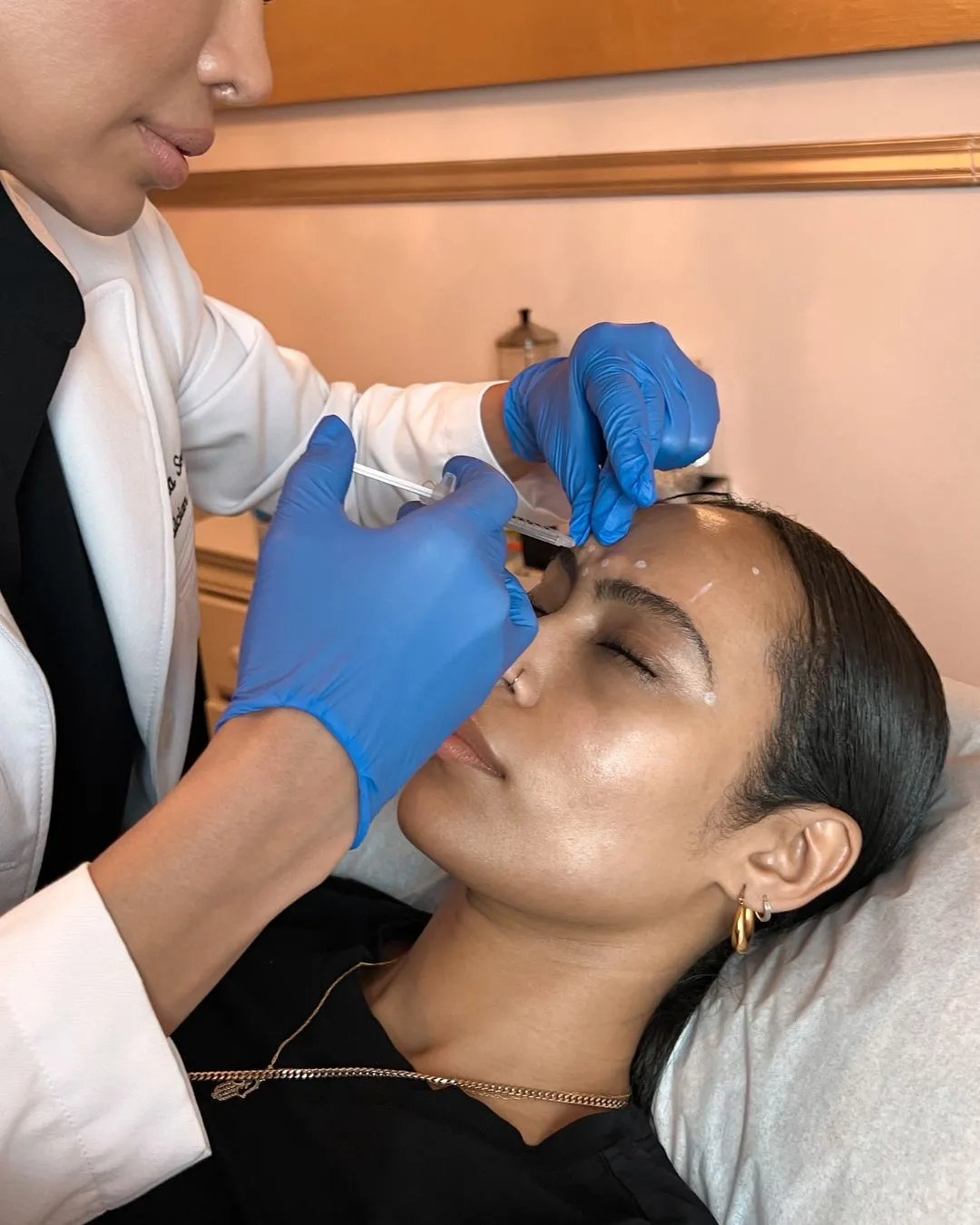
Watch Dr. Park, Medical Director at Cosmetic Medical Training, demonstrate how to inject Dysport for crow's feet in the video below.
Dysport is a botulinum toxin type A product and a well-known alternative to Botox. Like other neurotoxins, it temporarily relaxes targeted muscles to soften dynamic wrinkles. Dysport is reconstituted and dosed differently from Botox, so its units are not interchangeable with other brands.
What Are Crow's Feet?
Crow's feet, also called lateral canthal lines, are the fine lines that radiate outward from the corners of the eyes. They form mainly from repeated contraction of the lateral portion of the orbicularis oculi muscle, the muscle that closes the eyelids when a person smiles, squints, or laughs. Sun exposure, skin thickness, and age all influence how visible they become.
Why Crow's Feet Are a Common First Treatment
Crow's feet are one of the most frequently requested neurotoxin areas, and many practitioners include them in a first training course alongside the glabellar lines. Patients often ask for them because the lines appear when they smile, which makes them very noticeable in photos and in person. Treatment aims to soften the lines while preserving a natural, expressive smile.
Key Points to Understand Before Injecting
This section is an overview of what practitioners study in training. It is not a substitute for supervised instruction.
- Assess the patient's smile pattern. Muscle activity differs from person to person. Some patients have a fan-shaped pattern, others a more downward or full pattern. Watching the patient smile and squint helps guide treatment planning.
- Know the surrounding anatomy. Treatment is placed in the superficial lateral orbicularis oculi. Staying clear of structures that should not be affected, such as the muscles that lift the upper lip and the area close to the orbital rim, helps reduce the risk of unwanted effects like an uneven smile or eyelid changes.
- Use a conservative, individualized approach. Dosing and placement should follow the current manufacturer prescribing information, your training, and your clinical judgment.
- Plan for reassessment. A follow-up visit lets you review results and make adjustments, and it helps patients set realistic expectations.
Dysport and Botox: What Practitioners Should Know
Both products are botulinum toxin type A, but they have different formulations and dilutions, and their units are not equivalent. Practitioners should always use the reconstitution and dosing guidance specific to the product in their hands. You can read more in our overview of what BOTOX Cosmetic is and our Dysport training and certification course.
Patient Selection and Safety Reminders
Neurotoxin treatment is not appropriate for everyone. Practitioners typically review the patient's medical history, medications, allergies, and pregnancy or breastfeeding status before treating. A known hypersensitivity to any ingredient is a reason not to treat, and Dysport's prescribing information also lists an allergy to cow's milk protein as a contraindication. Product handling matters too, so see our article on botulinum toxin storage.
Practice This Technique With Us
Watching a demonstration is a good start, but injecting safely takes supervised practice. At our Dysport and Botox courses you can learn technique, anatomy, and patient assessment with feedback from an experienced instructor. Explore:
- Dysport Training & Certification Course
- Online Comprehensive Botox Training
- Hands-On 1 Day Advanced Botox & Dermal Filler Training
Related Technique Guides
- Glabellar Botox Injection Technique
- Baby Botox vs. Microtox
- Injecting to Treat Masseter Hypertrophy or Facial Slimming
Frequently Asked Questions
What muscle causes crow's feet? Mainly the lateral part of the orbicularis oculi, which contracts when a person smiles or squints.
Is Dysport dosed the same as Botox? No. The products are formulated and diluted differently, and units are not interchangeable. Always follow the prescribing information for the specific product.
How soon do results appear and how long do they last? This varies by patient and product. Practitioners generally explain to patients that results develop over days and gradually fade over a few months, and that follow-up allows adjustments. Check the current prescribing information for specifics.
Who can learn this technique? Our training is for licensed healthcare professionals. Your ability to inject depends on your state's scope-of-practice rules, so confirm with your licensing board.
Do I need hands-on practice? Online learning covers the foundations, but many practitioners find hands-on practice on live models, with an instructor present, essential for building confidence.