Search "Botox certification Arizona" and you find 3 common claims: your license alone is all you need, a weekend workshop is sufficient, or the course that certifies aesthetic injectors carries official endorsement. None of these claims are accurate.
License rules vary from state to state. A crowded weekend workshop where you barely inject any patients is not enough training. The State of Arizona issues no generic aesthetic injectables certificate, state licensing boards do not formally approve private course vendors, and the FDA licenses the biologic product—not the practitioner holding the syringe.
Whether you are an MD or DO expanding your practice, a Medical Director supervising nursing staff, or a clinician entering aesthetics, mastering neurotoxins requires three things: strict compliance with A.R.S. Title 32, verified procedural competency, and rigorous adherence to the FDA package insert and consensus practice for off-label indications.
Through Cosmetic Medical Training, clinicians can complete their education through three practical formats designed around their practice schedule: One-Day Onsite In-Office Training, One-Day Live Teleconference Hands-On Training, or Online-Only Didactic Modules.
1. Arizona Botox Certification Requirements: What the Law Actually Mandates
Regulation in Arizona operates across two jurisdictional tiers: federal safety labeling and state-level professional practice acts.
[Federal Regulation: FDA] [State Licensing Boards: A.R.S. Title 32]
BLA 103000 Mandates Individual Practice Acts & AAC Rules
- Biologic safety & reconstitution - MD/DO: Full prescriptive & surgical scope
- Standard FDA-approved indications - NP: Independent full-practice authority
- Boxed warnings & systemic risk - RN/PA: Good-Faith Exam & delegated orders
At the federal level, the FDA regulates onabotulinumtoxinA (BOTOX® and BOTOX® Cosmetic) under BLA 103000. Approved indications include glabellar lines, lateral canthal lines, horizontal forehead rhytids, and vertical platysma bands. The FDA does not license or credential individual clinicians.
At the state level, the injector is regulated under A.R.S. Title 32 and the Arizona Administrative Code (A.A.C.):
- Physicians (MD / DO): Regulated by the Arizona Medical Board (AMB) under A.R.S. § 32-1401 et seq. and the Arizona Board of Osteopathic Examiners in Medicine and Surgery under A.R.S. § 32-1800 et seq. Physicians hold autonomous procedural authority. Under A.R.S. § 32-1401(27), failing to maintain or prove procedural competency in aesthetic medicine constitutes unprofessional conduct.
- Nurse Practitioners (NPs): Arizona is an independent, full-practice authority state governed by the Arizona State Board of Nursing (AZBN) under A.R.S. § 32-1601 et seq. Qualified NPs can examine, diagnose, prescribe, and inject independently without a physician collaborative agreement or medical director.
- Registered Nurses (RNs): RNs cannot practice aesthetics independently. Under the AZBN Advisory Opinion on Medical Aesthetic Procedures, administering a neurotoxin requires:
- An Initial Good-Faith Examination (GFE): An MD, DO, NP, or PA must complete an initial evaluation (in-person or via compliant telehealth) to establish the diagnosis and prescribe specific unit doses before the RN treats the patient.
- Written Provider Orders: Injections must follow patient-specific medical orders.
- Supervision & Medical Direction: A licensed medical director must remain available for clinical escalation and complications management.
- Physician Assistants (PAs): Regulated by the Arizona Regulatory Board of Physician Assistants under A.R.S. § 32-2501 et seq., PAs administer injectables pursuant to their collaborative practice agreement.
- Estheticians & Medical Assistants: Under the Arizona Board of Cosmetology, estheticians are legally barred from skin puncture and administering prescription medications. Delegating injections to non-licensed personnel exposes the supervising physician to AMB disciplinary action for aiding and abetting the unauthorized practice of medicine.
2. What "Botox Certification" Actually Means
A course certificate carries specific clinical and legal boundaries:
- Professional License: Your Arizona medical or nursing license is the sole legal instrument authorizing you to inject or delegate. A training certificate never substitutes for licensure.
CME/CE Accreditation:Accredited continuing education—such as AMA PRA Category 1 Credits™ or AZBN-accepted contact hours—satisfies state license renewal rules underA.A.C. R4-19-401.- Certificate of Completion: Issued by Cosmetic Medical Training, this credential documents verified didactic completion, clinical anatomy testing, and supervised live injections. It fulfills requirements from aesthetic malpractice insurers, hospital credentialing bodies, and clinic SOPs.
3. Compare Our 3 Training Pathways
Rather than forcing providers into crowded hotel seminars, Cosmetic Medical Training delivers three distinct pathways tailored to your practice structure, location, and operational goals:
| Feature | 1. One-Day Onsite In-Office Training | 2. One-Day Live Teleconference Training | 3. Online-Only Didactic Course |
| Location | Your own clinic/office (Phoenix, Scottsdale, Tucson, or anywhere in AZ) | Your office via live 1:1 video conferencing | Self-paced 100% online portal |
| Instruction Style | Direct, shoulder-to-shoulder faculty supervision in your office or clinic | Real-time, interactive coaching on live models via two-way video | Asynchronous video lectures, anatomy modules, and quizzes |
| Model Injections | Yes (typically 4–6 live patient models provided by your clinic) | Yes (typically 4–6 live patient models provided by your clinic) | No live models (didactic and technique demonstration only) |
| Provider Pricing | 2 providers trained for the price of 1 (extra staff at discounted add-on) | 2 providers trained for the price of 1 (cost-effective, zero travel overhead) | Single-provider license access |
| Turnkey Assets | Full practice startup kit, consent forms, P&L blueprint, GFE logs | Full practice startup kit, consent forms, P&L blueprint, GFE logs | Standard clinical PDFs, forms, and instructional videos |
| Best Suited For | Clinics seeking intensive, hands-on launch without staff travel | Faster scheduling, rural Arizona practices, or low-overhead setups | Refresher training, didactics review, or out-of-state scope prep |
Method 1: One-Day Onsite In-Office Training
An experienced clinical instructor travels directly to your practice. You receive immediate access to online prep modules (facial anatomy, pharmacology, and reconstitution) prior to training day. Onsite, the entire schedule is dedicated to hands-on patient evaluation, injection mapping, and needle-in-hand administration across 4 to 6 live models in your own treatment rooms. Your clinical staff and non-medical front desk can also observe to master consultation and booking workflows.
Method 2: One-Day Live Teleconference Hands-On Training
Our proprietary tele-training format connects you live, face-to-face with a senior instructor via high-definition video while you treat patient models in your office. The instructor observes your needle angulation, depth, reconstitution, and site marking in real time, offering immediate verbal and visual correction. This eliminates travel delays and allows practices anywhere in Arizona to get certified as early as next week. If you ever feel your tele-training was insufficient, our guarantee allows you to upgrade to onsite training by simply covering instructor travel.
Method 3: Online-Only Video Training
A comprehensive, self-paced curriculum featuring high-resolution procedure demonstrations, muscle vector analysis, and clinical safety lectures. Ideal for experienced injectors needing a formal refresher, clinicians preparing for board or malpractice documentation, or medical directors who oversee aesthetic operations and need a thorough grounding in standard operating protocols.
4. FDA-Label Dosing and Clinical Safety Benchmarks
Every training method at Cosmetic Medical Training is built around the FDA package insert (BLA 103000), safe reconstitution practices, and functional anatomy:
| Treatment Zone | Standard Dose | Sites & Target Musculature |
| Glabellar Lines | 20 Units | 0.1 mL (4 Units) across 5 sites: 1 procerus, 2 in each corrugator supercilii. |
| Lateral Canthal Lines | 24 Units | 0.1 mL (4 Units) across 3 sites per side (6 total sites) in the lateral orbicularis oculi. |
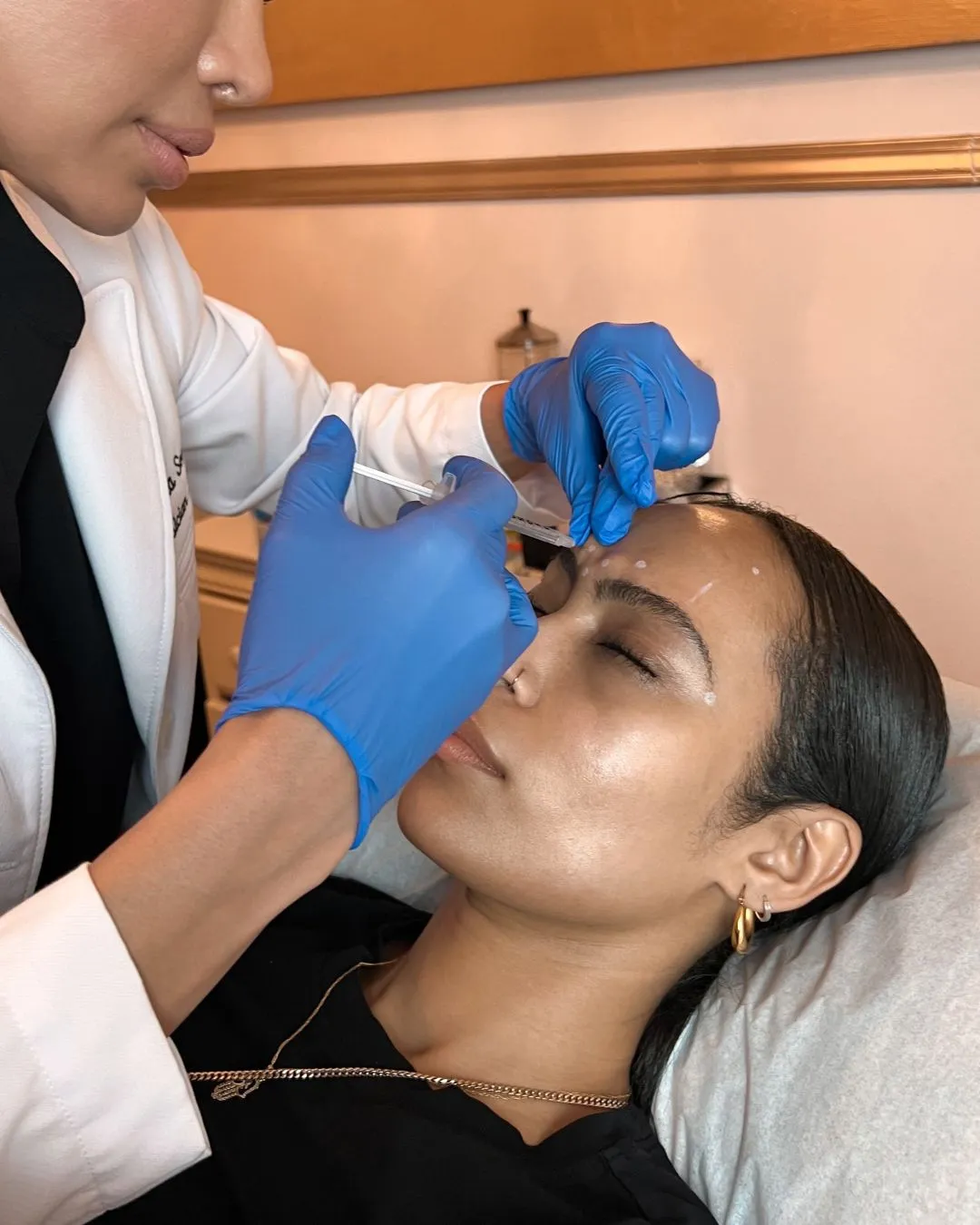
| Forehead Lines | 20 Units (40 combined) | 4 Units across 5 frontalis sites, balanced with 20 Units in the glabella to avoid brow ptosis. |
| Platysma Bands | 26–36 Units | 2 Units per site across 4 upper platysma sites + 1 Unit per site along vertical platysmal bands. |
| Quarterly Limit | 400 Units Max | Maximum cumulative dose across all adult indications in a 3-month window. |
Boxed Warnings and Adverse Event Management
All trainees review the FDA Boxed Warning for Botulinum Toxins, detailing systemic dissemination risks (dysphagia, diplopia, dysarthria, and respiratory compromise).
Complications training focuses on actionable recovery:
- Eyelid Ptosis (Blepharoptosis): Caused by local diffusion into the levator palpebrae superioris. Protocols include immediate prescribing of alpha-adrenergic agonists (apraclonidine 0.5% or oxymetazoline 0.1%) to stimulate Müller’s muscle.
- Single-Patient Vials: Preservative-free reconstitution must follow sterile single-use standards. Never divide single-dose vials across multiple patients.
- Unit Non-Interchangeability: Potency Units of onabotulinumtoxinA cannot be converted 1:1 to abobotulinumtoxinA (Dysport®) or incobotulinumtoxinA (Xeomin®).
In addition, Cosmetic Medical Training offers training for many off-label injection techniques such as: brow lift, under eye jelly roll, bunny nose lines, gummy smile, lip flip, smile flip (depressor anguli oris), peach pit (mentalis chin), jowl lines, masseter, facial slimming, Barbie Botox, hyperhidrosis and more.
Here is a new, conversion-focused section designed to slot directly into your guide ahead of the call to action, structured to capture high-intent local search queries like "Botox training Scottsdale," "Botox training Phoenix," "Botox training Tucson," and "Botox training East Valley."
5. Arizona Regional Market Analysis: Demographics & Injector Opportunity by Metro Area
Clinical technique is only half the equation—launching a profitable injectables service line requires matching clinical offerings to local demographic demand and patient spending power. Arizona’s rapid population growth, high year-round UV exposure (accelerating sun damage and wrinkles), and active wellness economy create distinct micro-markets across the state’s urban centers.
+-----------------------------------------------------------------------------------------+
| ARIZONA AESTHETIC CORRIDOR |
+------------------------------------+----------------------------------------------------+
| Greater Phoenix / Scottsdale | Southern Arizona & East Valley |
| - High-AOV, multi-modality demand | - High-volume preventive ("baby Botox") |
| - Off-label advanced vectoring | - Therapeutic / migraine / bruxism diversification |
+------------------------------------+----------------------------------------------------+
Botox Training in Scottsdale: The Ultra-High-End Aesthetic Hub
Scottsdale represents one of the most concentrated luxury aesthetic markets in the United States, rivaling markets like Beverly Hills and Miami.
- Patient Profile & Economics: Median household incomes in North Scottsdale and Paradise Valley routinely surpass $150,000, accompanied by high disposable spending on personal wellness.
- Buying Behaviors: Scottsdale patients are educated, brand-conscious consumers who prioritize natural, undetectable outcomes over bargain pricing. They expect advanced full-face treatment plans: combining glabella and canthal smoothing with lower-face micro-dosing, DAO depressor release, platysmal neck cord reduction, and simultaneous dermal filler or biostimulator therapies.
- Clinical Focus for Injectors: Injectors training in Scottsdale must master subtle facial vectors, anatomical symmetry, and complication prevention to succeed in a highly competitive clinical landscape.
Botox Training in Phoenix: Volume, Corporate Professionals & "Brotox" Growth
As the fifth-largest city in the nation, Phoenix offers a large, economically diverse patient demographic spanning Downtown, Midtown, Arcadia, and the Biltmore corridor.
- Patient Profile & Economics: A thriving mix of healthcare leaders, tech entrepreneurs, finance professionals, and relocated West Coast corporate executives.
- Buying Behaviors: High demand for express lunch-hour appointments, preventive neuromodulators (patients aged 25–38), and a surging male demographic ("Brotox") seeking masseter reduction, jawline squaring, and conservative forehead softening.
- Clinical Focus for Injectors: Training in Phoenix emphasizes standardized treatment times, reproducible dosing grids, efficient consultation workflows, and comprehensive recordkeeping for multi-provider clinics.
Botox Training in Tucson: University Demographic & Year-Round Active Aging
Serving Southern Arizona, Pima County, and the Oro Valley enclave, Tucson blends academic faculty, outdoor endurance athletes, and high-net-worth retirees.
- Patient Profile & Economics: Dual consumer base: young professionals and graduate demographics around the University of Arizona, paired with affluent retirees and seasonal residents in Catalina Foothills and Oro Valley.
- Buying Behaviors: Intense desert sun exposure accelerates photo-aging, driving consistent demand for glabellar frown repair, peri-oral line softening, and hyperhidrosis (excessive axillary sweating) management. Patients in Tucson value longitudinal relationship-based care and transparent clinical explanations over aggressive medspa upselling.
- Clinical Focus for Injectors: Mastery of conservative aging protocols, combination sun-damage recovery strategies, and clinical directorship compliance tailored to community practice.
Botox Training in Chandler, Gilbert & Mesa: The East Valley Family & Medspa Boom
The East Valley suburbs—specifically Chandler, Gilbert, and Queen Creek—anchor Arizona’s most rapid family and tech-corridor expansion.
- Patient Profile & Economics: Median household incomes exceed $105,000, driven by semiconductor and healthcare corridors (the "Silicon Desert").
- Buying Behaviors: Dominated by busy dual-income parents aged 30–50 seeking efficient, restorative treatments. High loyalty rates for local family-practice medical directors and boutique suburban medspas offering subscription memberships and bundled neurotoxin packages.
- Clinical Focus for Injectors: Practical, high-yield frontalis and corrugator mapping, safe RN delegation workflows, and patient retention strategies that integrate smoothly into primary care or suburban aesthetic practices.
Arizona Metro Aesthetic Buying Profile
| Metro Area | Core Target Demographic | Median Treatment Frequency | Top Patient Requests | Strategic Practice Model |
| Scottsdale / Paradise Valley | High Net Worth, 35–65+; Luxury Lifestyle | 3–4 times annually | Full-face harmonization, platysma bands, combination biostimulators | Premium boutique clinic, bespoke concierge aesthetic medicine |
| Phoenix (Biltmore / Arcadia) | Corporate executives, 28–52; Growing male cohort | 3–4 times annually | Glabella, frontalis, masseter slimming, axillary hyperhidrosis | High-efficiency medical spa, integrated multi-provider wellness center |
| Tucson / Oro Valley | Active retirees, university faculty, 32–70+ | 2–3 times annually | Photo-damage rhytid correction, crow’s feet, therapeutic migraine/bruxism | Established primary care add-on, physician-led clinical aesthetic center |
| East Valley (Gilbert / Chandler) | Suburban professionals, tech sector, 30–48 | 3–4 times annually | Preventive "baby Botox," perioral lines, family practice cross-referrals | Subscription membership medspa, community family health/cosmetic suite |
6. Frequently Asked Questions
Which training format is best if I want to train my RN along with me?
Both the One-Day Onsite and One-Day Teleconference options include training for up to two providers for the price of one. This allows an MD, DO, or NP to train side-by-side with an RN injector, ensuring unified clinical technique and clear supervisory communication.
Does an Arizona Medical Director have to be on site while an RN injects?
Under Arizona law, the medical director does not have to be physically in the room for every injection, provided that a qualified prescriber (MD, DO, NP, or PA) has performed an initial Good-Faith Exam, established the treatment plan, and remains readily available for emergency consultation and complication management.
How do I prepare live patient models for our training day?
For Onsite and Teleconference formats, your office recruits 4 to 6 live models (typically staff, friends, or patients seeking discounted treatments). We supply pre-training guidance on patient selection, health histories, and product purchasing so that your inventory is ready when instruction begins.
Can out-of-state providers attend the Arizona training?
Yes. Many providers travel to Arizona or take our live teleconference course from their home clinics. However, practicing independently or treating patients within Arizona requires an active Arizona professional license.
7. Enroll and Secure Your Practice Credentials
Elevating your practice with aesthetic injectables requires verifiable skill, legally defensible delegation, and direct hands-on instruction.
Whether you choose Onsite In-Office Training, Interactive Tele-Training, or Online Modules, Cosmetic Medical Training provides complete certification records, business starter toolkits, consent forms, and post-course clinical support.
Call (212) 470-8059 or visit CosmeticMedicalTraining.com to check upcoming dates, schedule private in-office instruction, and register your clinical team.
8. Regulatory Disclaimer
This content is intended strictly for clinical educational purposes and does not constitute formal legal counsel or state licensing board representation. Practitioners must verify their scope of practice and supervisory requirements under A.R.S. Title 32 with the Arizona Medical Board, the Arizona Board of Osteopathic Examiners, or the Arizona State Board of Nursing.